 |
Science Frontiers ONLINE No. 16: Summer 1981 |
|
| 
|
Blebs And Ruffles
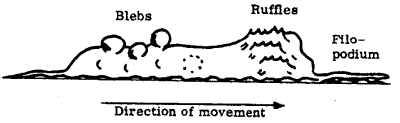
Single cells taken from multicellular organisms tend to inch along like independent amoebas -- almost as if they were looking for companionship or trying to fulfill some destiny. This surprising vo-lition of isolated cells becomes an even more remarkable property when the individual cells are fragmented. Guenter Albrecht-Buehler, at Cold Spring Harbor Laboratory, has found that even tiny cell fragments, perhaps just a couple percent of the whole cell, will tend to move about. They develop blebs (bubbles) or ruffles and extend questing filopodia. They have all the migra tory urges of the single cells but cannot pull it off. Cell fragments will bleb or ruffle, but not both. Why? Where are they trying to go?
(Anonymous; "The Blebs and Ruffles of Cellular Fortune," New Scientist, 90:87, 1981.)