 |
Science Frontiers ONLINE No. 16: Summer 1981 |
|
| 
|
More Fell Fallout
J.H. Bradner and H. Laudin present a highly readable synopsis of Barry Fell's ideas about Precolumbian expeditions to North America. In this article, as in Fell's books, the data form the core of the controversy. Reviewed are the Blanchard Stone (Celtic writing in Vermont); a ceramic tablet inscribed in ancient Libyan (Big Bend National Park, Texas); the Massacre Lake petroglyphs (apparent Carthaginian writing in Nevada); and two Roman coins from a group picked up along a Massachusetts beach. Traditionalists denounce these finds and Fell's interpretations with a fervor once reserved for von Daniken.
(Bradner, John H., and Laudin, Harvey; "America's Prehistoric Pilgrims," Science Digest, 89:90, May 1981.)
Comment. The fact is that if any one of Fell's many, many identifications and translations of North American inscriptions is correct, our whole view of ancient seafaring will have to change.
Reference. Our Handbook Ancient Man brims with anomalous inscriptions found all over the world. For details on this book, go to: here.
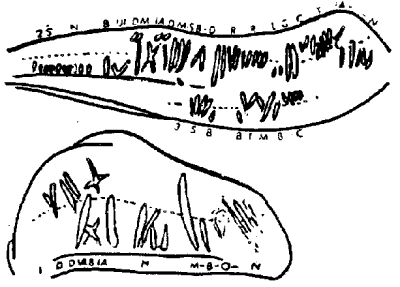
| The Blanchard Stone, discovered in Vermont, is a prayer for rain inscribed in a form of Gaelic used by Iberian Celts, according to Barry Fell. |